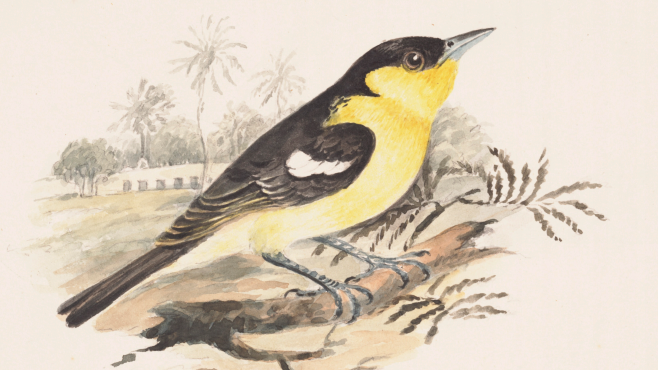
Explore the eighteenth and nineteenth-century historical and cultural context through which the Gwillims lived.
| Romanticism emerges as an aesthetic and intellectual movement in opposition to Neoclassicism | 1760 | |
| 1761 | The French Capital of Pondichéry falls to the British | |
| Elizabeth Gwillim (nee Symonds) is born on April 21 | 1763 | |
| 1763 | The Kingdom of Mysore conquers the Kingdom of Keladi | |
| The Treaties of Hubertusburg and Paris are signed, ending the Seven Years War; Britain emerges as the world’s superpower | 1763 | |
| 1763 | Tipu Sultan and Hyder Ali establish their first fleet, The Mysore Navy, on the Malabar Coast | |
| Pondichéry is returned to France, and will change hands between the French and British over the next 50 years | 1765 | |
| 1767 | The First Anglo-Mysore War begins | |
| Hetty (Hester) Symonds, Elizabeth and Mary’s sister, is born sometime this year | 1768 | |
| 1768 | The Royal Academy is founded by a group of 34 artists, supported by King George III | |
| The Treaty of Madras is signed on April 4th, marking a peace agreement between Mysore and the British East India Company | 1769 | |
| 1769 | The French Crown abolishes the French East India Company |
| The Bengal Famine kills one third of the Bengal population | 1770 | |
| 1772 | The Armenian Church of the Holy Virgin Mary is built in Madras | |
| Mary Symonds is born on October 9 | 1772 | |
| 1773 | The Boston Tea Party; all tea imported by the East India Company is boycotted in American Colonies | |
| The British East India Company holds power to sell opium in Bengal | 1773 | |
| 1775 | Sir Ashton Lever’s museum in London is opened | |
| The first Anglo-Maratha War begins | 1775 | |
| 1776 | American Independence is adopted through the Declaration of Independence | |
| The East India Company sends a portrait of Nawab Muhammad Ali of Arcot to be shown in the Society of Artists’ spring exhibition | 1777 |
| 1780 | The Second Anglo-Mysore War begins | |
| The First Anglo-Maratha War ends | 1782 | |
| 1782 | William Gilpin publishes Observations on the River Wye, and Several Parts of South Wales, &c. Relative Chiefly to Picturesque Beauty; Made in the Summer of the Year 1770, introducing the notion of the “picturesque” as an aesthetic scheme for landscapes | |
| William Pitt signs the India Act, establishing governance of the British Government in India to help control the assertion of dominance that the East India Company held over the nation | 1784 | |
| 1784 | Elizabeth Symonds and Henry Gwillim marry on May 27th | |
| The Second Anglo-Mysore War ends | 1784 | |
| 1785 | Henry and Elizabeth give birth to a daughter named Elizabeth, who dies before her first birthday | |
| Madras’s first newspaper, The Madras Courier, is established. It is sold to the public at a price of one rupee | 1785 | |
| 1786 | The first post office is established in Madras | |
| William Petrie establishes the first observatory in the East in Madras | 1786 | |
| 1787 | Henry is admitted to the Middle Temple and gets called to the Bar | |
| Thomas Parry arrives in Madras | 1788 | |
| 1789 | The French Revolution begins |
| The Third Anglo-Mysore War begins | 1790 | |
| 1790 | The sewing machine is invented | |
| The first Indian emigrant of the United States arrives in Massachusetts from Madras | 1790 | |
| 1790 | Thomas Pennant, Welsh naturalist, publishes the illustrated book Indian Zoology | |
| The Province of Quebec is divided into two British colonies; Upper Canada and Lower Canada | 1791 | |
| 1791 | Thomas Symonds, father to Elizabeth and Mary, dies on March 12 | |
| The Madras observatory is established from William Petrie’s and is now managed by the East India Company, commencing meteorological observations | 1792 | |
| 1792 | The Third Anglo-Mysore War ends. Tipu Sahib, Sultan of Mysore, is defeated by British troops | |
| Mary Wollstonecraft publishes A Vindication of the Rights of Women | 1792 | |
| 1793 | Louis XVI and Marie Antoinette are executed | |
| The cotton gin is invented resulting in an upheaval of the cotton industry and slavery | 1793 | |
| 1794 | The Government Survey School is established at Fort St. George, the largest engineering school outside of Europe | |
| Henry Gwillim is elected as member of the Society for the Encouragement of Arts, Manufacturers and Commerce | 1795 | |
| 1795 | British artists Thomas and William Daniell publish the first volume of their Oriental Scenery, a collection of lithographs of views of India | |
| The Wallajah Mosque in Madras is built by the nawab of Karnataka | 1795 | |
| 1796 | Hetty Symonds marries Richard H. James | |
| Thomas Bewick, well known English engraver and natural history author, publishes A History of British Birds | 1797 | |
| 1798 | The Fourth Anglo-Mysore War begins, lasting one year | |
| Henry Gwillim completes a preparation of a new (fifth) edition of Matthew Bacon’s New Abridgement of the Law | 1798 | |
| 1799 | The Dutch East India Company ceases operations | |
| The first meeting of Girtin’s Sketching Club takes place | 1799 |
| 1801 | Henry, Elizabeth, and Mary move to India | |
| The United Kingdom is formed through the merging of the Kingdom of Ireland and the Kingdom of Great Britain | 1801 | |
| 1801 | Henry Gwillim is sworn as Puisne Judge of the Supreme Court of Madras on September 4. He also publishes Collection of Acts and Records of Parliament . . . respecting Tithes | |
| The Treaty of Amiens is signed, forming a temporary peace between France and Great Britain | 1802 | |
| 1802 | The Second Anglo-Maratha War begins | |
| India’s population is 200 million | 1803 | |
| 1804 | Napoleon Bonaparte declares himself emperor of France; Antoine Jean Gros paints Napoleon in the Plague House at Jaffa, marking the beginning of Orientalism | |
| The world’s population reaches one billion | 1804 | |
| 1804 | The Haitian Revolution ends and Haiti gains independence | |
| The Second Anglo-Maratha War ends | 1805 | |
| 1806 | Esther Symonds, mother to Elizabeth and Mary, dies on January 19 | |
| Indian Sepoys stage a mutiny against the East India Company in the city of Vellore | 1806 | |
| 1807 | Elizabeth Gwillim dies on December 21 at the age of 44 | |
| Henry and Mary voyage to England | 1808 | |
| 1809 | Henry Gwillim and Mary Symonds disembark at Falmouth on May 13 | |
| The Treaty of Amristar is signed by Maharaja Ranjit Singh, creating boundaries of interest for him and the East India Company | 1809 | |
| 1809 | Mary Symonds marries John Ramsden on November 30 |
| A committee of the Privacy Council makes their decision that Henry Gwillim should be removed from his judicial seat in Madras | 1810 | |
| 1812 | The War of 1812 begins, lasting until 1815 | |
| Henry Gwllim remarries to Elizabeth Chilman | 1812 | |
| 1813 | The Charter Act of 1813 is set in place, asserting the Crown’s sovereignty over British India | |
| Mary and John give birth to their second son, John George Ramsden; their first son, born in 1813, died in infancy | 1815 | |
| 1816 | Conclusion of the Napoleonic Wars; Pondichéry, Chandernagore, Karaikal, Mahe and Yanam and the lodges at Machilipatnam, Kozhikode and Surat are returned to France | |
| Author Jane Austen dies | 1817 | |
| 1817 | The Third Anglo-Maratha War begins and lasts for one year | |
| Frankenstein is published by Mary Shelley | 1818 |
| 1820 | An outbreak of cholera leads to thousands of Indian citizen and British troop deaths | |
| The first passenger locomotive makes its journey on a public line in Northern England | 1825 | |
| 1826 | The world’s first photograph is taken | |
| American naturalist John James Audubon first publishes The Birds of America | 1827 |
| 1833 | Slavery is banned throughout the British Empire | |
| English is made the official court language of India | 1835 | |
| 1835 | The first medical school in Madras is founded | |
| The Madras Chamber of Commerce is established, the second chamber of commerce in the country | 1836 | |
| 1837 | Queen Victoria I begins her reign | |
| Lower and Upper Canada are unified | 1840 |
By Myles Browne
 The Gwillim Project